Relock
Session Security
End session hijacking attacks and verify
every request
 Overview
How Relock Session Security works
Relock binds every authenticated session to the device that created it. When a session token leaks — through malware, phishing, or a man-in-the-middle proxy — the attacker holds a credential that simply will not work anywhere else.
Instead of relying on static cookies and bearer tokens, Relock continuously proves possession of a hardware-backed device key on every request. The result is a silent layer of defense that runs underneath your existing auth flow.
See the flow diagram below or read the detailed integration guide.
Attack scenarios
Relock device binding protects an authenticated session from being used by any other device. The sandbox application allows you to test it against three attack vectors that closely simulate real-world threats:
- Cookie Replay — your cookies only, replayed from an attacker's device.
- Session Hijack — your cookies + localStorage + sessionStorage, replayed from an attacker's device.
- Identity Impersonation (IMPaaS) — the same material as T2, replayed from a device that looks like yours.
Each attack is more sophisticated than the last, peeling back another layer of conventional defense — password and MFA, then session risk signals, then even advanced device fingerprinting and intelligence suites.
Description
The simplest session theft. An attacker who obtains only your session cookie — from a proxy, an XSS leak, or a single line in a stealer log — replays it from their own browser to walk straight into your authenticated session. No password, no MFA prompt, because the session is already past both.
Testing scenario
Copy all active cookies from your browser and replay them from a fresh browser posing as a different device.
Expected outcome
Rejected. Relock requires a fresh integrity token to prove possession of the device key, and the attacker is not able to produce it.
Run it yourself
You can replicate each of the simulated attack scenarios above with the same session replay harness that we used.
Just install the dependency, log into the sandbox app in a new browser instance, and select the attack tier.
npx playwright install chromium # first run only — downloads the browser (~150MB)
npx github:Relock-Security/sandbox#v0.3.1
Or clone and run it if you'd rather read the source first.
git clone https://github.com/Relock-Security/sandbox.git
cd sandbox
npm install
npm start
You can also point the harness at your own applications to test your exposure to session-level threats. It runs entirely on your machine(s) and never handles any sensitive input, such as passwords.
Go deeper on session security
Resources, documentation, and research from the Relock team.
Relock Security Context
How Relock binds sessions to devices and why it neutralizes threats.

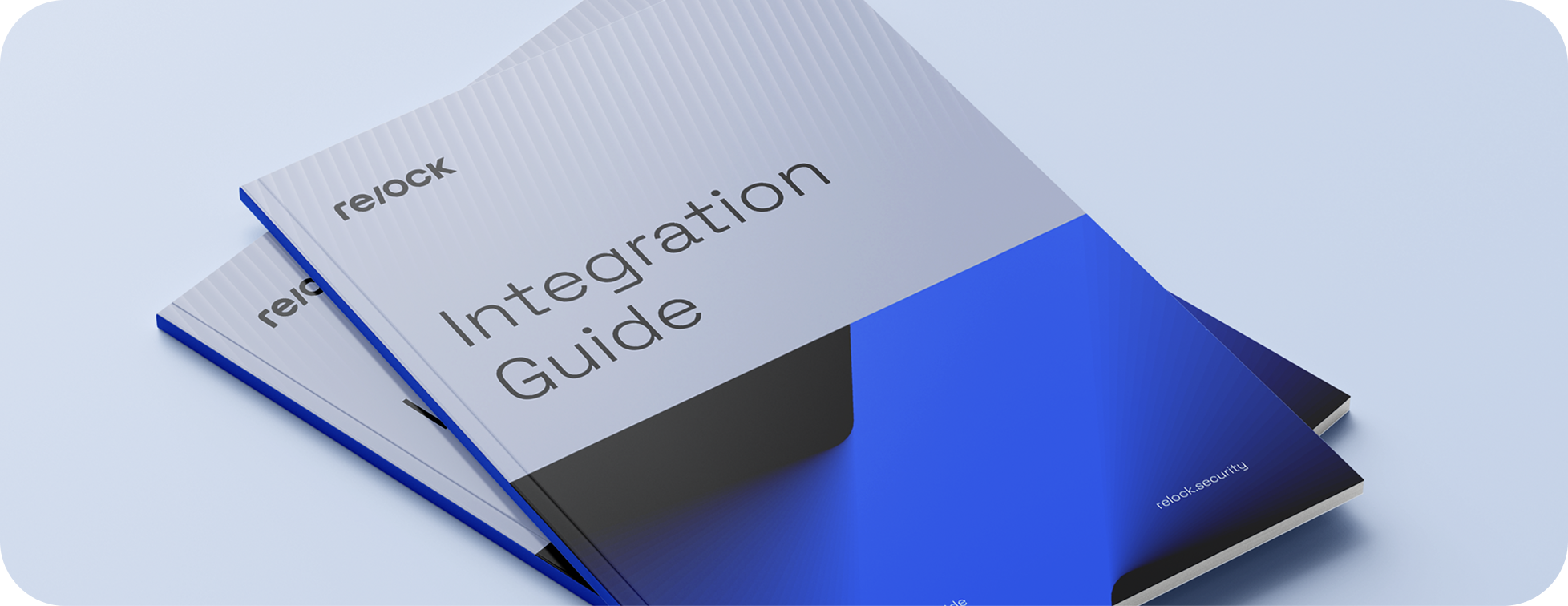
Integration Guide
See how Relock is integrated into this sandbox and Auth0 authentication.
Session Security Landscape 2026
See how G2 Best and Fastest Growing software products fared against session replay attacks.

Get in touch
Reach out to the Relock team for a deep dive discussion.
Skip the demo, dive right in
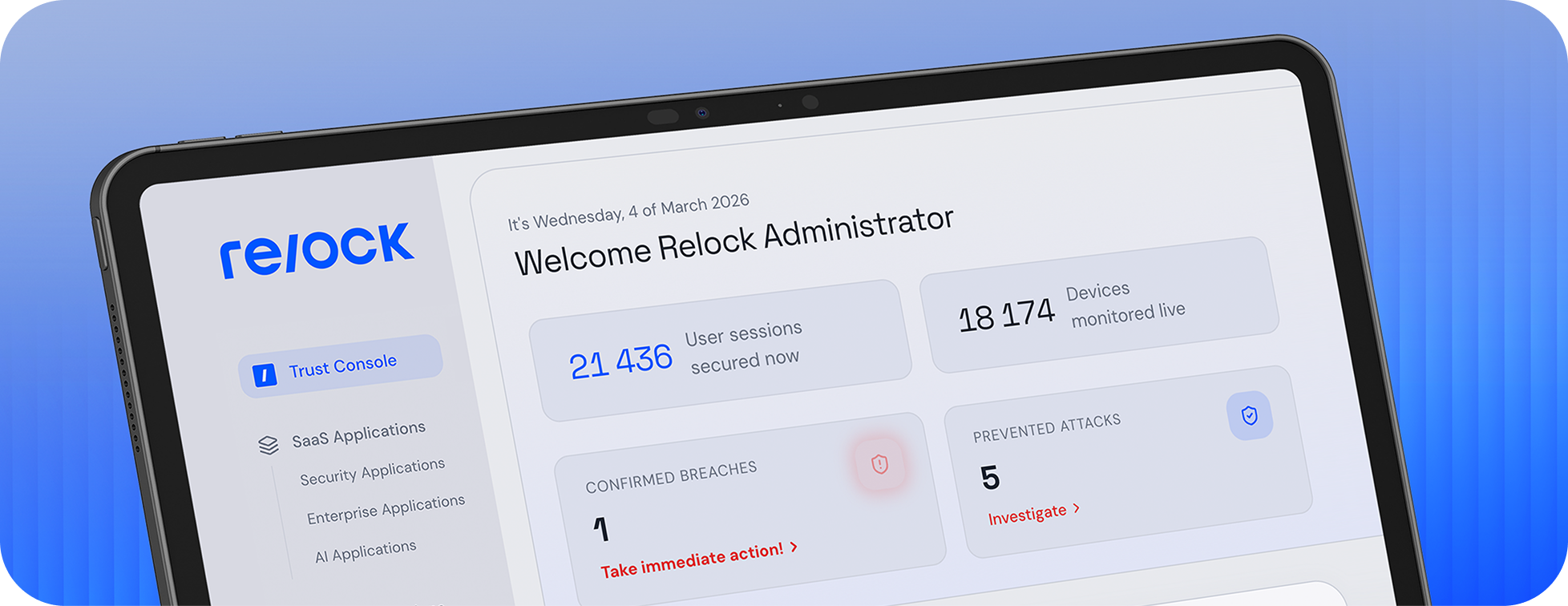
Get familiar with Relock
Log in to a Relock-protected application.
It is an open space for defenders to see session security in action, run real-world attack scenarios, and test your apps.



End session attacks
with one solution
For any user, app, browser.
Invisibly.